Your enthusiasm is statistically irrelevant
Learn the system.
Break the sequence.
OBRUM is easy to start.
Mastering it is something else entirely.
1. Build. Score. Survive.
Every run begins with a corrupted grid.
Your objective is simple:
build systems powerful enough to generate massive score chains…
…without letting the board spiral out of control.
The stronger your board becomes, the more dangerous it gets.
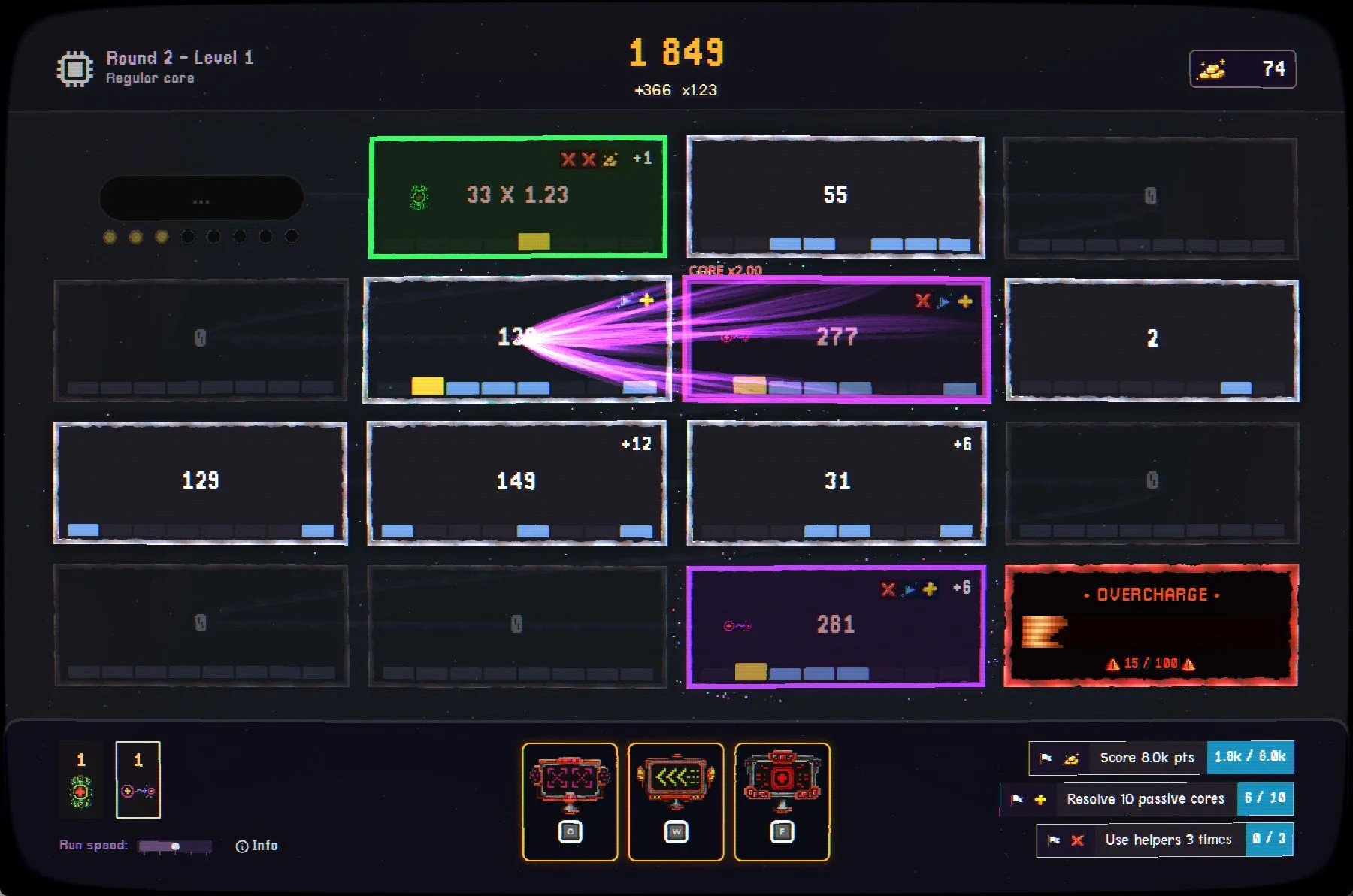
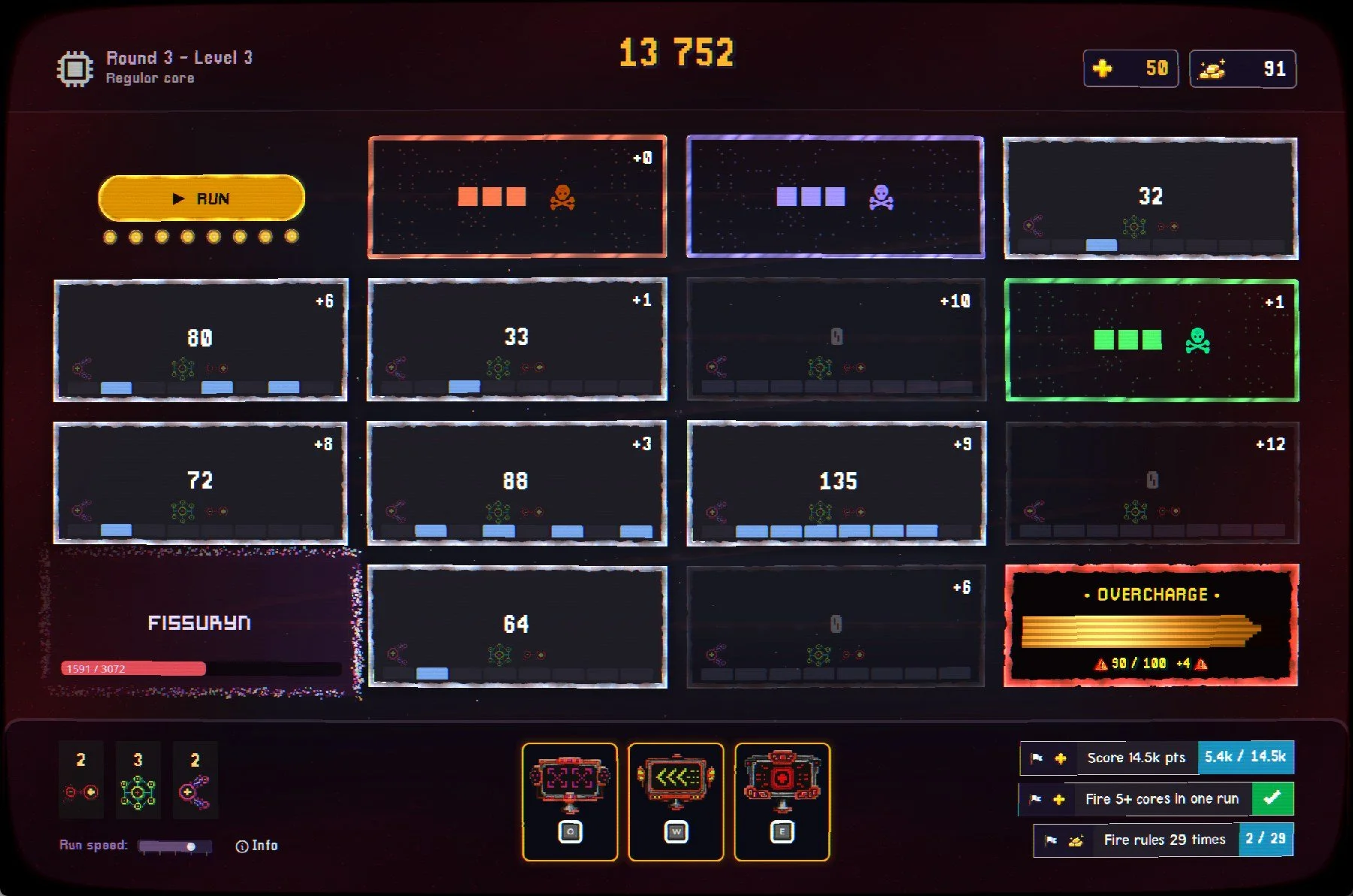
Rules are continuously drafted thorughout your run, and each tile on the board can be modified as you wish.
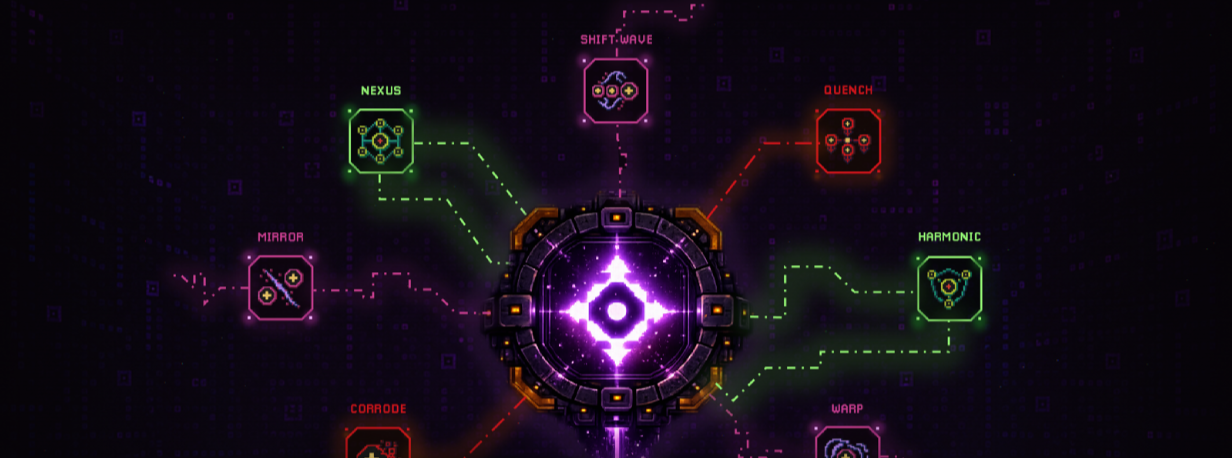
You choose which cores you want to activate and where to implement rules.
Some amplify nearby cores.
Some spread corruption.
Some destabilize the entire sequence.
The challenge isn’t just building value.
It’s controlling what happens next.
2. Every core follows rules.
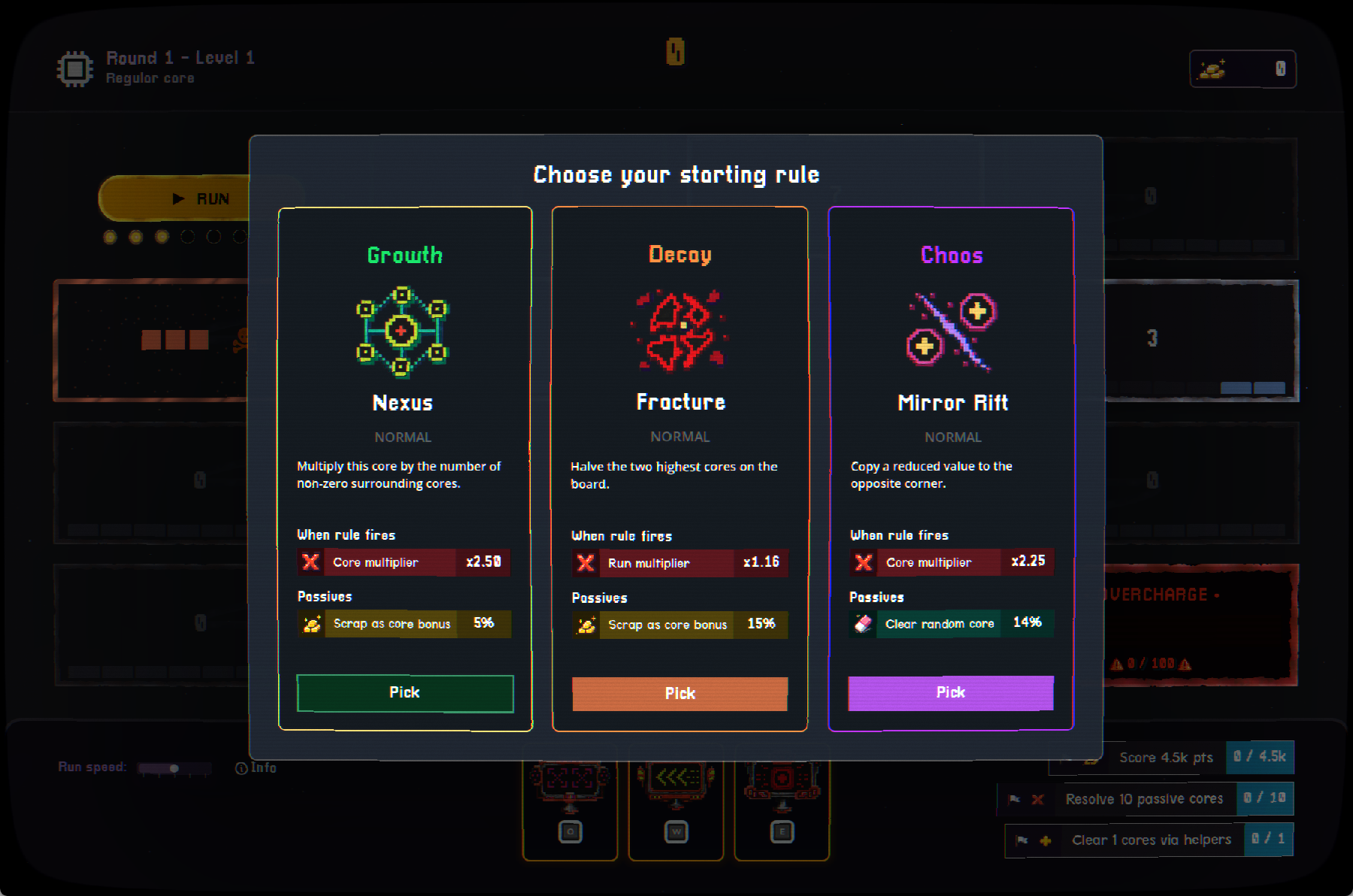
3. Then you run ▶.
When running the system, every core and their active rules executes in sequence.
A perfect setup can trigger devastating chain reactions.
A bad one can collapse the entire board instantly.
The system is predictable.
The outcomes rarely are.

High-value boards generate Overcharge.
Too much overcharge, and you are done for.
You are constantly balancing:
growth
control
greed
survival
4. Power creates pressure.
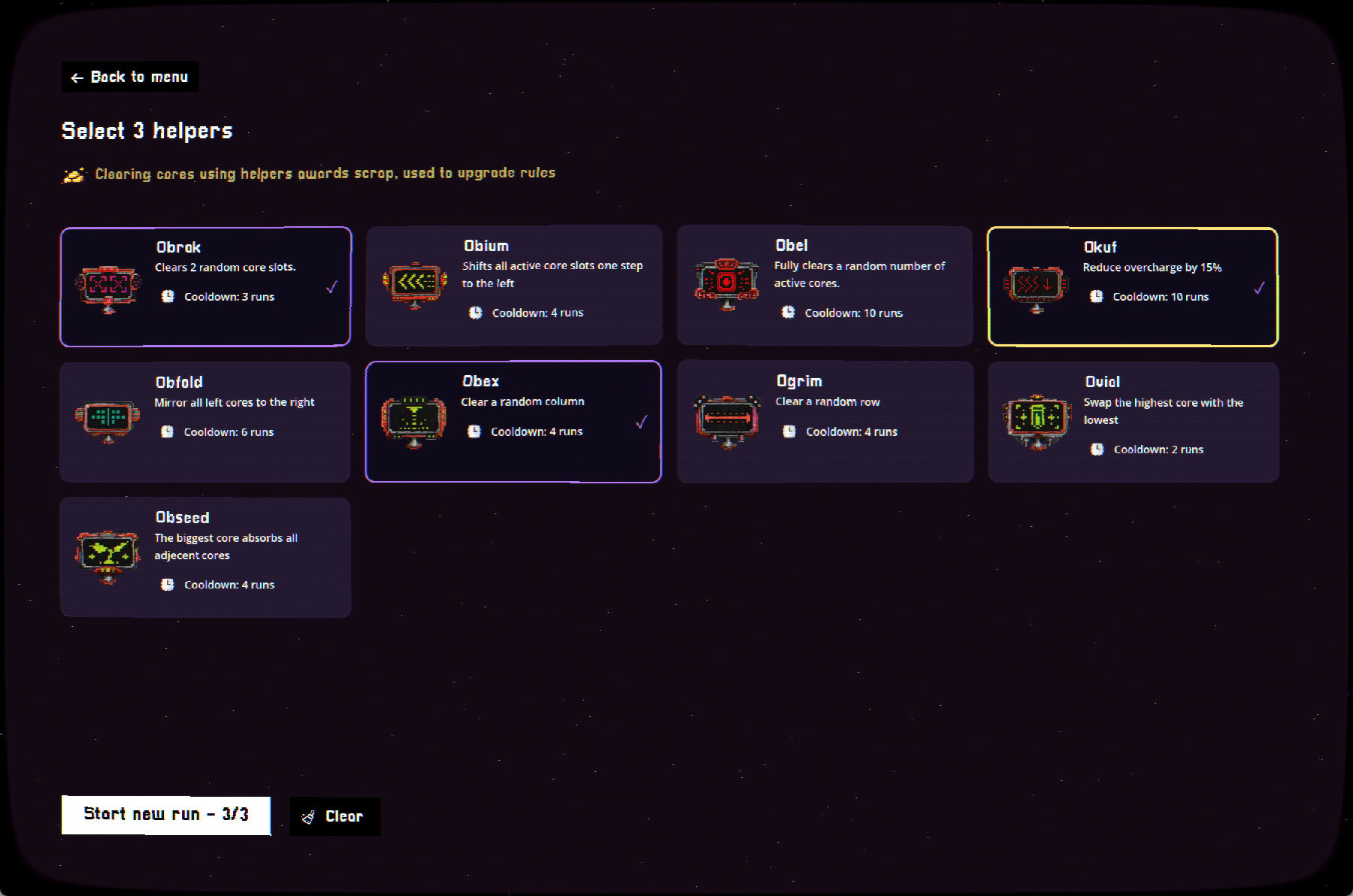
Helpers can manipulate the board in powerful ways:
erase cores
shift rules
stabilize dangerous systems
or weaponize the chaos further
Use them wisely.
OBRUM rarely gives second chances.
5. When all else fails, improvise.
Obrum wont go down quietly.
Enemies interfere with your setup and needs to be cleared from the board.
Bosses go further. Each boss has its own special conditions. Read their descriptions closely.
Adaptation matters more than planning here.
6. The system fights back.